
|
Getting your Trinity Audio player ready...
|
Telecom expense management companies are the unsung heroes of the enterprise IT world. If you’ve ever stared at a carrier invoice that looks more like a phone book than a bill, you know the pain. Managing thousands of mobile lines, SD-WAN circuits, and cloud contracts manually isn’t just difficult—it’s a financial leak waiting to burst.
As a telecom analyst who has spent over a decade auditing carrier billing and untangling complex vendor contracts, I’ve seen companies overspend by millions simply because they couldn’t see what they were paying for. The best telecom expense management (TEM) partners don’t just process bills; they act as a forensic audit team, an inventory manager, and a contract negotiator all in one.
This guide breaks down the top providers in the market, from global giants to specialized auditors, to help you regain control of your technology spend.
If you are a large organization with strict compliance needs (like banking or healthcare), skip straight to Cass Information Systems. If you are managing a massive fleet of thousands of wireless devices and need pure scale, look at Tangoe first.
Table of Contents
ToggleWhat Are Telecom Expense Management Companies?
Telecom expense management companies provide software and services to manage an organization’s voice, data, and wireless spend. While they started by simply checking phone bills, modern TEM providers have evolved into Technology Expense Management partners.
They handle the full lifecycle of your communications assets:
Inventory Management: Tracking who has which device and what circuits are active at which branch.
Invoice Auditing: Automatically scanning carrier bills against your contract rates to find errors.
Dispute Management: Filing claims with carriers to get your money back when they overcharge (and they always do).
Procurement: Handling the ordering of new devices or circuit disconnects.
Why Businesses Need Professional TEM Services
You might think your AP department can handle the phone bills. In reality, telecom invoices are notoriously complex and error-prone. Industry data suggests that 12% to 20% of telecom charges are in error.
Without a dedicated TEM partner, you face:
“Zombie” Services: Paying for lines at closed retail locations or for employees who left years ago.
Contract Drift: Auto-renewing at unfavorable standard rates because you missed the negotiation window.
Shadow IT: Departments spinning up SaaS or cloud accounts on corporate cards without IT oversight.
A TEM company doesn’t just pay the bill; they validate that the bill is correct before a single cent leaves your account.
Top 7 Telecom Expense Management Companies
There is no single “best” provider. The right choice depends on your size, your global footprint, and your existing software stack. Here are the top players I’ve encountered in the market.
1. Tangoe: Best for Global Enterprises
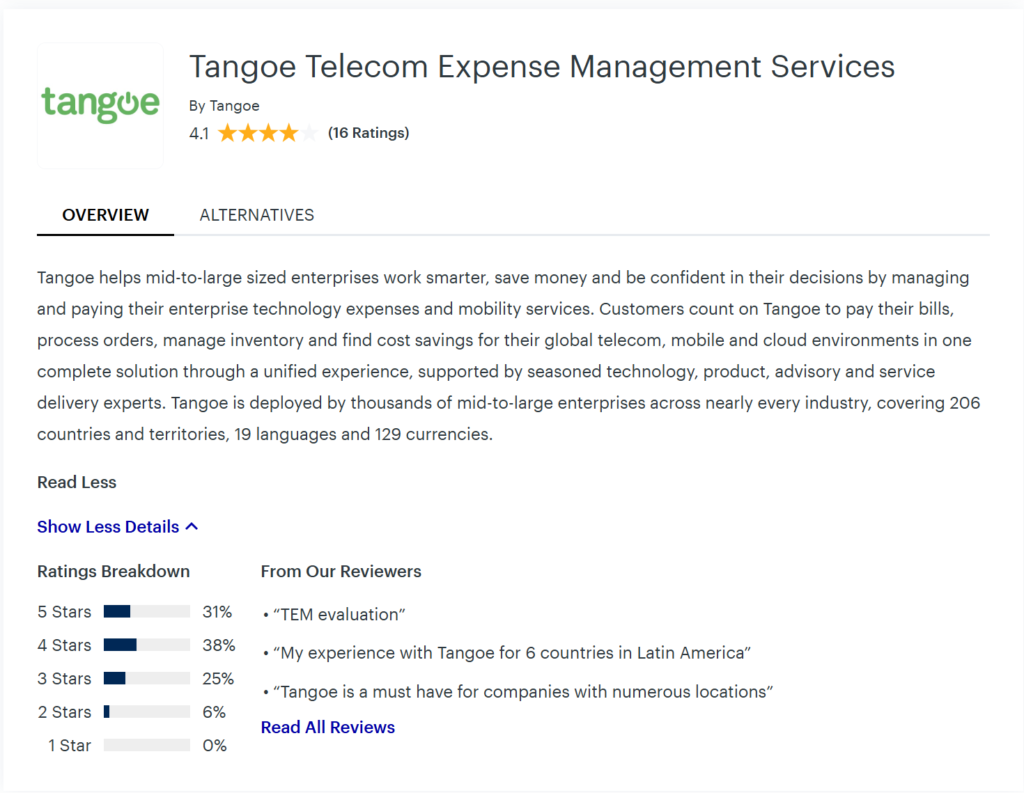
Tangoe is the heavyweight champion for organizations managing thousands of devices. If you are a large enterprise with a massive fleet of mobile assets, Tangoe’s scale is unmatched.
The Vibe: The “Big Blue” of TEM. Built for volume and global complexity.
Key Feature: Tangoe One. This platform is designed for high-volume enterprise wireless expense management. It uses AI to process millions of invoices and tracks inventory for massive mobile fleets, ensuring that managing 50,000 devices feels as easy as managing 50.
Best For: Global enterprises and large organizations that need to manage scale without breaking a sweat.
2. Calero: Best for Analytics & Inventory Integrity
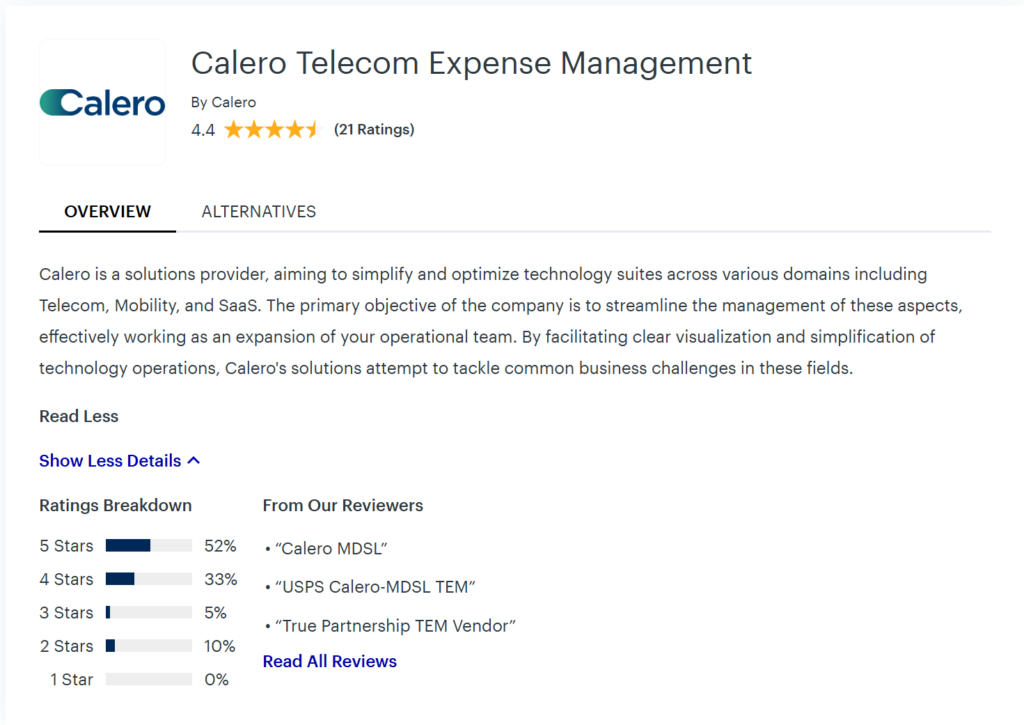
Calero has gained massive traction by positioning itself not just as an expense manager, but as a true Communications Lifecycle Management (CLM) platform. If you are debating between “TEM vs. CLM,” Calero is the argument for the latter—moving beyond simple bill payment to total control of the asset.
The Vibe: Data-nerd heaven. Clean dashboards, deep granularity, and a focus on the “lifecycle” of every device.
Key Feature: Their approach to UEM (Unified Endpoint Management) allows them to verify if a line is actually being used. While basic TEM tools just check the invoice, Calero’s CLM approach pulls data directly from the device to identify “zero-usage” phones that are sitting in a drawer but still costing you money.
Best For: Enterprises that want deep reporting to present to the CFO and need to bridge the gap between IT operations and Finance.
3. Sakon: Best for UX & Invoice Automation
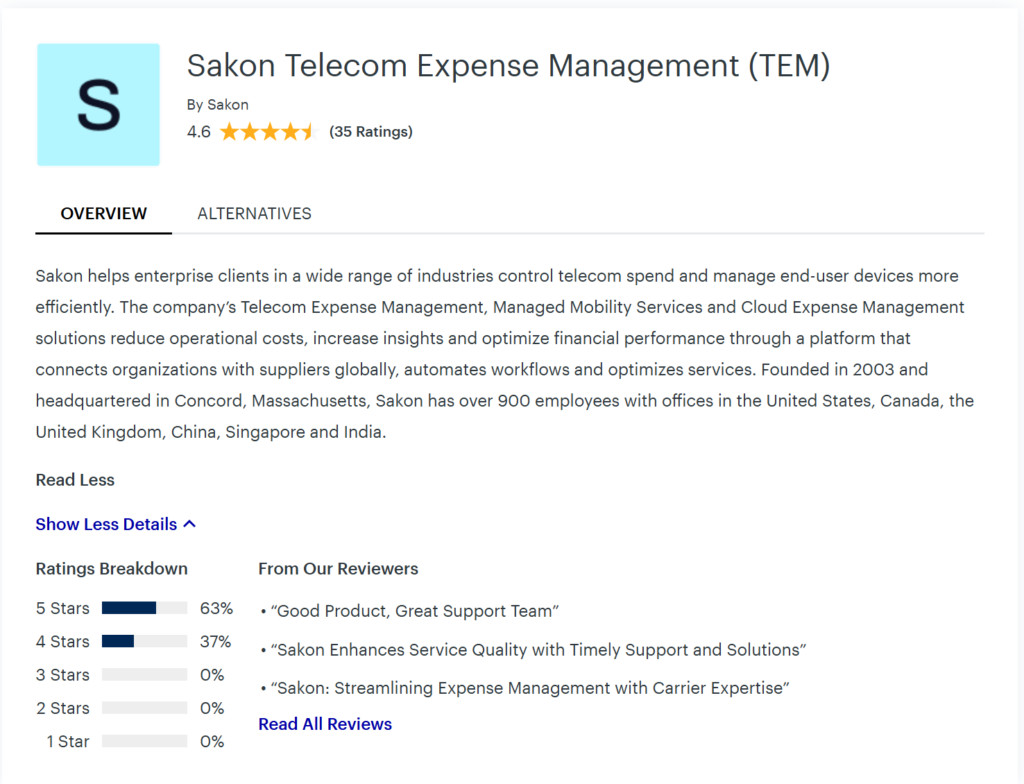
Sakon has a reputation for having one of the most user-friendly interfaces in the industry. While some legacy TEM platforms look like spreadsheets from 2005, Sakon feels like a modern SaaS app.
The Vibe: Modern, agile, and user-centric.
Key Feature: Their Synip platform excels at mobility management. They have built fantastic workflows for employee onboarding and offboarding—ensuring a new hire gets their phone on day one, and the line is killed the second they leave.
Best For: Companies that want to decentralize some ordering tasks to end-users without losing control.
4. Cass Information Systems: Best for Financial Control
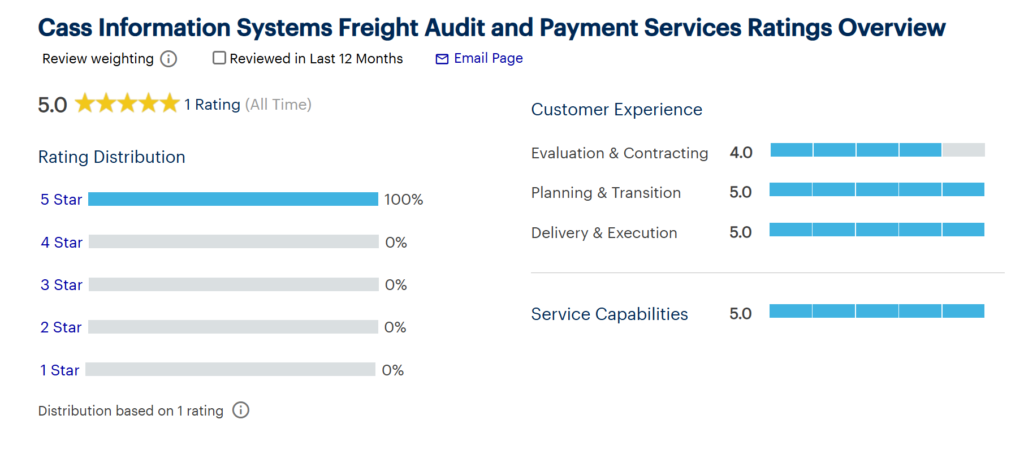
Cass is unique because they are a Federal Reserve Member Bank. For organizations with strict compliance needs, Cass offers a level of financial security that standard software companies cannot match.
The Vibe: The banker’s choice. Secure, precise, and audit-ready.
Key Feature: Direct Bill Payment with Audit Trails. Cass doesn’t just manage the data; they handle the funds with bank-grade security (SOC 1 & SOC 2 Type II compliance). They provide rigorous audit trails for every wireless and wireline dollar spent, satisfying even the strictest internal governance policies.
Best For: Healthcare, Finance, and Government entities where regulatory compliance and data security are non-negotiable.
5. brightfin: Best for ServiceNow Users
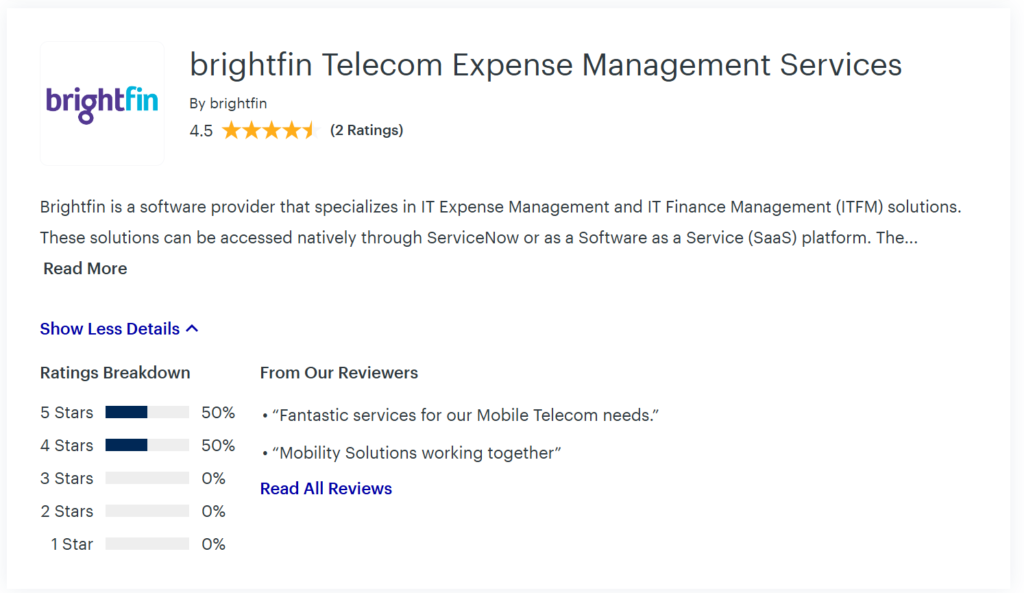
brightfin disrupted the market by building their solution native to ServiceNow. If your IT team lives in ServiceNow for ticketing, brightfin makes TEM part of that same workflow.
The Vibe: Seamless integration.
Key Feature: Native ServiceNow App. You don’t need a separate login. Your inventory lives in your existing CMDB (Configuration Management Database). When a ticket is closed in ServiceNow (e.g., “Employee Terminated”), brightfin can automatically trigger the carrier disconnect.
Best For: Any enterprise already heavily invested in the ServiceNow ecosystem.
6. SpyGlass: Best for Snapshot Audits
SpyGlass is different. They aren’t usually looking to sell you a long-term software platform. They are “audit-first.” They come in, analyze your bills, find savings, and take a percentage of what they save you.
The Vibe: The bounty hunters.
Key Feature: Success-Based Pricing. If they don’t find savings, you often don’t pay. They are excellent for a one-time “cleanup” before you move to a software platform or sign a new carrier contract.
Best For: SMBs or Mid-Market companies that suspect they are overpaying but don’t want to implement a complex software system.
7. vCom Solutions: Best for Mid-Market Lifecycle Management
vCom bridges the gap between software and managed services, specifically for companies that need lifecycle management without the complexity of an enterprise-grade SaaS tool. They position themselves as an extension of your IT team, handling the asset from “cradle to grave.”
The Vibe: The “Department as a Service.”
Key Feature: vManager. This platform handles the entire communications lifecycle—from procurement (buying the device) to operations (support) and finally expense management (paying the bill). Their service team is the real differentiator; they are hands-on with project management, ensuring you aren’t just managing expenses, but managing the technology itself.
Best For: Mid-market companies (500–5,000 employees) with lean IT staffs that need a partner to handle the “grunt work” of dealing with carriers.
Quick Comparison: Top 7 TEM Providers
If you are short on time, here is an at-a-glance breakdown of how these top telecom expense management companies compare in terms of ideal use case and standout features.
| Company | Best For | Standout Feature | Primary Model |
| Tangoe | Global Enterprises (MNCs) | AI-driven automation & global scale | SaaS + Managed Service |
| Calero | Data-Focused IT Teams | Deep inventory & UEM integration | SaaS |
| Sakon | Mobility Management | User-friendly interface & onboarding | SaaS |
| Cass | Finance & Compliance | Secure direct payments (Regulated Bank) | Managed Service |
| brightfin | ServiceNow Users | Native ServiceNow integration | SaaS |
| SpyGlass | SMBs & Cost Audits | Risk-free contingency audits | Success-Based Fee |
| vCom | Mid-Market Lifecycle | Full lifecycle “Department as a Service” | Hybrid (SaaS + Service) |
Frequently Asked Questions (FAQ)
Q: Which is better: Calero TEM vs. Communications Lifecycle Management (CLM)?
This is often a misconception. Calero IS a Communications Lifecycle Management (CLM) platform. You typically don’t choose between them. “TEM” usually refers to the specific act of managing invoices, while “CLM” is a broader strategy that includes TEM plus device ordering, inventory management, and managed mobility services. Calero is often considered “better” than standalone TEM tools because it covers this full lifecycle spectrum.
Q: Which TEM provider is best for large organizations with strict compliance needs?
For organizations with thousands of devices and strict regulatory requirements (like Banking, Healthcare, or Government), Cass Information Systems is the top choice. Because Cass is a regulated Federal Reserve Member Bank, they offer superior financial security and audit trails (SOC 1 & SOC 2 Type II). If your primary need is purely managing the scale of 50,000+ devices, Tangoe is also a strong contender due to its massive global footprint.
Q: How do SpyGlass and SpyGlass funds work?
The SpyGlass Group is different from standard software providers. They perform a “Snapshot Audit” to find billing errors and recover overcharges. Note: Do not confuse them with the Spyglass Growth Fund (SPYGX), which is a mutual fund. The “funds” SpyGlass talks about are the recovered savings from your carrier overpayments, not an investment portfolio.
Q: How much do Telecom Expense Management companies charge?
Pricing models vary. Software-based providers (like Sakon or Calero) typically charge a subscription fee per device/line (often $0.50 – $2.00 per line/month). Audit-based firms (like SpyGlass) often work on a contingency basis, keeping a percentage of the savings they find (e.g., 30–50% of recovered costs) for a set period, with no upfront cost to you.
Q: How long does it take to implement a TEM solution?
A full enterprise software implementation (like Tangoe or brightfin) can take 3 to 6 months due to the complexity of gathering carrier contracts, building inventory, and setting up API feeds. However, a contingency audit (like SpyGlass) can usually start showing results in 4 to 6 weeks since it requires less integration.
My Experience: The “Zombie Line” Reality
I want to share a quick story from my time consulting that perfectly illustrates why telecom expense management companies are necessary.
I was working with a logistics company that had about 40 distribution centers. They swore their telecom inventory was accurate because “Accounting pays the bills every month.”
We engaged a TEM provider to do a historical audit. Within the first week, we found the “Zombie Lines.”
The company had closed a warehouse in Ohio three years prior. The electricity was off, the building was sold, and the employees were gone. But the dedicated fiber circuit and about 20 landlines were still active. The invoices were being sent to a central PO Box, and the AP clerk, recognizing the carrier name (AT&T or Verizon), just stamped “Paid” because the amount was consistent.
They had paid over $45,000 for a ghost building.
This wasn’t negligence; it was a process failure. Accounting doesn’t know the building closed; IT doesn’t see the bills. A TEM platform bridges that gap by validating every line item against an active inventory list. If the inventory says “Closed,” the bill gets flagged. It’s that simple.
How to Choose the Right Telecom Expense Management Company
Selecting a vendor is high stakes. Transitioning TEM providers is painful—it involves moving carrier data, Letter of Agency (LOA) forms, and historical invoices. You want to get it right the first time.
Here is my checklist for evaluating these vendors:
Software vs. Service Mix: Do you want a tool your team uses (SaaS), or do you want a team to do it for you (Managed Service)? Be honest about your internal bandwidth. If you don’t have a telecom analyst, buy the Managed Service.
Carrier Integrations: Ask them specifically: “Do you have e-bonding (automated digital connection) with my specific carriers?” If they are manually scraping PDFs for your main carrier, it will be slow and error-prone.
Global Capabilities: If you have offices in Brazil or China, ask about their experience there. Invoicing regulations vary wildly by country. A US-centric TEM provider will fail in South America.
Savings Guarantee: Some providers (like SpyGlass or specific specialized auditors) will work on a contingency basis. Most software platforms (Tangoe, Calero) charge a subscription fee but should be able to project an ROI based on your spend.
Final Thoughts
The telecom landscape is only getting messier. With 5G, IoT (Internet of Things), and SD-WAN, the number of devices and contracts IT has to manage is exploding.
Partnering with one of these telecom expense management companies isn’t just about cutting costs—though that’s a nice benefit. It’s about visibility. You cannot secure, manage, or optimize what you do not know you have. Whether you choose a giant like Tangoe or a specialized auditor like SpyGlass, the most expensive decision you can make is to continue doing it manually.
Pingback: The Financial Planning Process: 6 Proven Steps to Build Wealth